
Wall-Mounted vs. Mobile Whiteboards: Which Is Better?
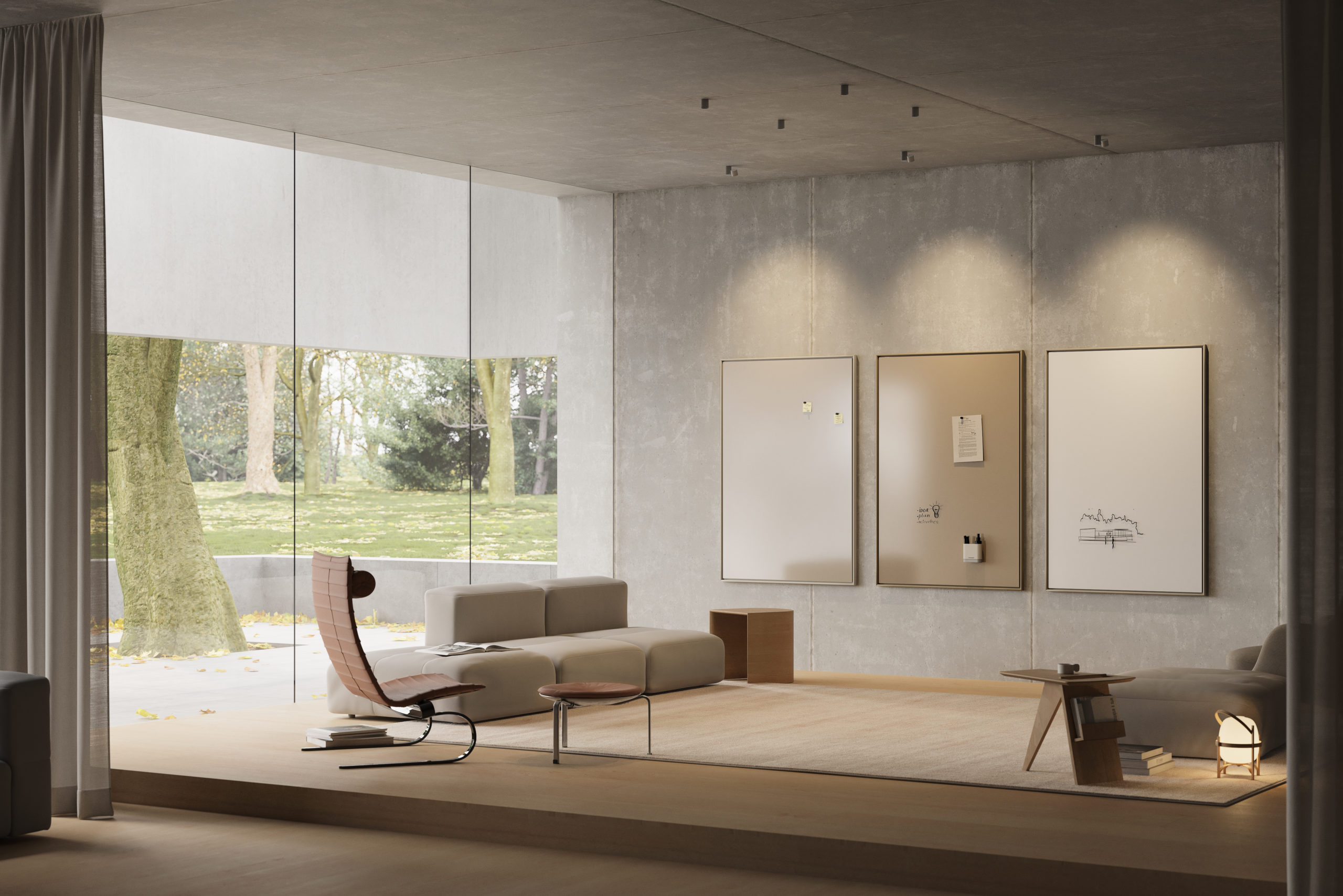
Choosing the right whiteboard is not just about size, colour or material. It is also about how the board fits into the way people work.
Some workspaces benefit from a permanent writing surface, while others need the flexibility to move ideas, presentations and discussions between different areas.
So, should you choose a wall-mounted whiteboard or a mobile whiteboard?
What Is the Difference Between Wall-Mounted and Mobile Whiteboards?
The main difference is how and where the board is used.
A wall-mounted whiteboard is installed in a fixed position, providing a permanent writing surface for meetings, planning and everyday communication.
A mobile whiteboard, on the other hand, can be moved between rooms or working areas. This makes it particularly useful in flexible offices where teams frequently change their surroundings.
Both options support collaboration, but they serve different needs.
When Should You Choose a Wall-Mounted Whiteboard?
Wall-mounted whiteboards are ideal for spaces where writing and visual communication take place regularly in the same location.
They are commonly used in meeting rooms, individual offices and dedicated collaboration areas.
Advantages of Wall-Mounted Whiteboards
- Permanent availability: The writing surface is always ready in the same location.
- Space efficiency: Wall-mounted boards do not require additional floor space.
- Integrated design: The board can become a natural part of the interior.
- Different sizes: Larger surfaces can provide room for presentations, planning and group discussions.
For offices looking for a glass writing surface, CHAT BOARD® CLASSIC offers 13 standard sizes and 25 standard colours.
Wall-mounted solutions can also be incorporated into larger interior projects. Our article on Whiteboard Solutions for Architects and Interior Designers explores how writing surfaces can become part of the overall design.
When Should You Choose a Mobile Whiteboard?
Mobile whiteboards are particularly useful in workspaces where flexibility is a priority.
Instead of bringing everyone to a fixed writing surface, the board can be moved to wherever it is needed.
This can be valuable during workshops, brainstorming sessions, team meetings and collaborative projects.
Advantages of Mobile Whiteboards
- Flexible positioning: Move the board between different working areas.
- Adaptable workspaces: Support changing layouts and team activities.
- Shared resources: One board can be used in multiple locations.
- Temporary collaboration areas: Create a writing space without permanent installation.
For example, CHAT BOARD® SPRINTER provides a mobile glass writing surface, while MOBILE combines magnetic glass with a BuzziFelt surface for writing and pinning.
Which Whiteboard Is Best for Meeting Rooms?
For a dedicated meeting room, a wall-mounted whiteboard is often a practical choice.
It provides a consistent writing surface for presentations, agendas and discussions without occupying floor space.
However, mobile boards can be useful in meeting rooms that serve several purposes or where the layout changes frequently.
In some workplaces, combining both solutions offers the greatest flexibility.
If you are planning a new meeting space, explore our guide to How to Design a Modern Meeting Room.
Which Whiteboard Is Best for Open-Plan Offices?
Open-plan offices often need to accommodate different activities throughout the day.
A space used for individual work in the morning might become a collaborative meeting area later.
Mobile whiteboards can support these changes by allowing teams to bring writing surfaces into different areas without permanently altering the layout.
Where additional separation is needed, mobile acoustic products can also help define working zones.
Read more about Acoustic Room Dividers for Modern Offices.
What About the Writing Surface?
Whether you choose a wall-mounted or mobile whiteboard, the writing surface is another important consideration.
Traditional whiteboards and glass whiteboards differ in appearance, construction and maintenance.
Glass writing surfaces offer a smooth, non-porous surface and are available in different colours, making them suitable for offices where both functionality and design matter.
For a detailed comparison, read Glass Whiteboard vs. Traditional Whiteboard: What’s the Difference?.
How to Choose the Right Whiteboard for Your Workspace
Before making a decision, consider how the board will be used.
Ask yourself:
- Will the whiteboard stay in one room or move between different areas?
- Is the workspace used for individual tasks, meetings or workshops?
- How much writing space is needed?
- Is available wall space or floor space a limitation?
- Should the whiteboard complement a particular interior design?
The answers will help determine whether a fixed or flexible solution is the better fit.
You can also explore our guide to Best Magnetic Glass Whiteboards for Offices for more advice on choosing a suitable board.
Find the Right Whiteboard Solution
There is no single whiteboard solution that works for every office.
Wall-mounted whiteboards provide a permanent writing surface, while mobile whiteboards make it easier to adapt to changing activities and working environments.
The best choice depends on how your team collaborates, the available space and the role the board should play in the interior.
Explore CHAT BOARD CLASSIC, SPRINTER and MOBILE to find a solution that fits your workspace.