
Acoustic Room Dividers for Modern Offices
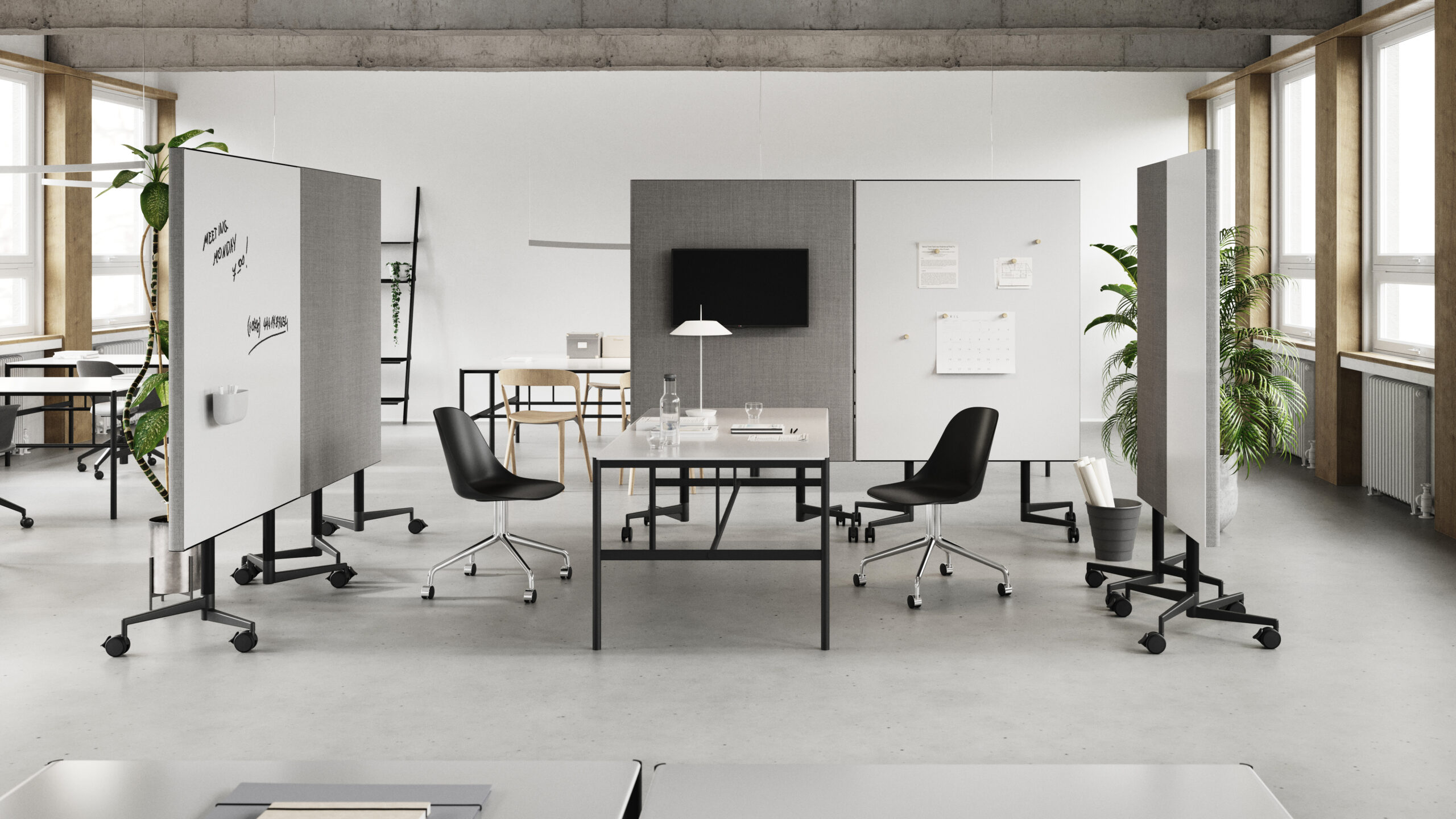
Modern offices are designed to encourage communication, collaboration and flexibility. However, open spaces can also create challenges when several activities take place at the same time.
Conversations, meetings and everyday office noise can make it difficult to concentrate, particularly in shared work environments.
Acoustic room dividers offer a flexible way to organise office spaces while helping to manage sound and create more comfortable working conditions.
But how can acoustic partitions be integrated into a modern office, and what should you consider when choosing the right solution?
What Are Acoustic Room Dividers?
Acoustic room dividers are partitions designed to separate areas within a larger space while incorporating materials that help absorb sound.
Unlike permanent walls, many acoustic dividers can be moved or repositioned as the needs of a workspace change.
They are commonly used in open-plan offices, collaborative environments and shared workspaces where different activities take place close to one another.
Depending on their design and materials, acoustic partitions can help reduce sound reflections and create a greater sense of separation between work areas.
However, they do not provide the same level of sound isolation as fully enclosed rooms.
Why Use Acoustic Room Dividers in an Office?
Open-plan offices offer opportunities for interaction, but they also require a balance between collaboration and concentration.
Acoustic room dividers can help create more defined working areas without changing the overall architecture of the space.
Creating More Privacy in Open Workspaces
In a shared office, employees may need to work independently while conversations and meetings take place nearby.
Acoustic partitions can provide visual separation between workstations and collaborative areas.
This creates a clearer distinction between different activities while maintaining the openness of the office.
Helping Manage Office Noise
Hard surfaces such as glass, concrete and plaster can reflect sound, contributing to reverberation in a room.
Acoustic materials can absorb some of these reflections, depending on their construction, placement and acoustic properties.
When used as part of a broader acoustic design, room dividers can contribute to a more comfortable sound environment.
Supporting Flexible Office Layouts
Office requirements can change throughout the day.
A large open area may need to accommodate individual work in the morning, team meetings in the afternoon and collaborative workshops later on.
Movable acoustic room dividers allow spaces to be adapted without permanent construction.
This makes them particularly relevant for flexible workplaces where furniture and room layouts change regularly.
Acoustic Room Dividers for Different Office Spaces
The most suitable acoustic solution depends on how the space is used.
Open-Plan Offices
In open-plan environments, acoustic partitions can help define smaller working zones within a larger shared space.
They can be positioned between workstations or used to separate collaborative areas from quieter sections of the office.
This allows different activities to take place within the same room while creating a clearer visual structure.
Meeting and Collaboration Areas
Not every discussion requires a fully enclosed meeting room.
Acoustic room dividers can help establish informal meeting areas for short discussions, brainstorming sessions and project work.
Movable solutions are particularly useful when these areas need to be rearranged throughout the day.
Creative Studios and Design Offices
Creative environments often require space for both individual concentration and collaborative activities.
Acoustic partitions can help divide larger studios into functional zones without compromising the flexibility of the overall layout.
For architects and interior designers, they also offer opportunities to introduce different materials and textures into the workspace.
Combining Acoustic Room Dividers with Writing Surfaces
In collaborative offices, room dividers can serve more than one purpose.
Instead of using separate products for space division and visual communication, multifunctional solutions can combine acoustic materials with writing surfaces.
This allows teams to create temporary collaboration areas while keeping ideas, sketches and project information accessible.
CHAT BOARD Move Acoustic combines magnetic glass with acoustic materials in a mobile solution designed for flexible working environments.
The glass surface can be used for writing, planning and presenting ideas, while the acoustic material adds a sound-absorbing element to the workspace.
This combination is particularly relevant in offices where teams regularly move between individual tasks and group activities.
For more inspiration on flexible working environments, explore our article on creating a collaborative office workspace.
Choosing the Right Materials for Acoustic Partitions
Material selection influences both the acoustic performance and visual appearance of a room divider.
Soft, porous materials are commonly used in acoustic products because they can absorb sound energy rather than simply reflecting it.
However, acoustic performance depends on several factors, including material thickness, construction, surface area and positioning.
For professional office projects, it is important to review the acoustic specifications of a product rather than assuming that all soft materials provide the same level of sound absorption.
From an interior design perspective, acoustic materials can also introduce texture and contrast into spaces dominated by hard surfaces.
Combining acoustic materials with glass, wood and metal can create a balanced visual expression while supporting different functional requirements.
How to Position Acoustic Room Dividers Effectively
The placement of acoustic partitions is just as important as their design.
Before selecting a solution, consider where noise is generated and which areas require greater separation.
For example, positioning a divider between an informal meeting area and individual workstations may help reduce direct sound transmission and provide visual screening.
It is also important to consider circulation routes, natural light and access to shared facilities.
A divider should support the way people move and work within a space rather than create unnecessary obstacles.
For larger projects, acoustic planning should be considered alongside the overall office layout to achieve the most suitable result.
Acoustic Room Dividers as Part of Interior Design
Acoustic solutions do not have to look like traditional office partitions.
In contemporary workplaces, room dividers can contribute to the overall design through their materials, proportions and visual expression.
For architects and interior designers, multifunctional products offer opportunities to integrate acoustic considerations without introducing unnecessary furniture.
A movable divider with a magnetic glass writing surface, for example, can provide a practical collaboration tool while helping define the surrounding space.
The result is a more considered approach to office design, where functionality and appearance work together.
Are Acoustic Room Dividers Enough to Soundproof an Office?
Acoustic room dividers can improve certain aspects of an office’s sound environment, but they should not be confused with soundproof walls.
Sound absorption and sound insulation serve different purposes.
Sound-absorbing materials help reduce reflections and reverberation within a space, while sound insulation aims to prevent sound from travelling between separate areas.
Because acoustic dividers do not typically form a complete enclosure, sound can still travel around and over them.
For spaces requiring confidential conversations or a high degree of acoustic privacy, enclosed meeting rooms or additional sound insulation may be necessary.
Acoustic room dividers are therefore best considered one element of a broader workplace acoustic strategy.
Creating a More Flexible Office with Acoustic Room Dividers
A well-designed office should support different ways of working.
Acoustic room dividers can help organise open spaces, introduce visual separation and contribute to improved acoustic comfort.
When combined with movable furniture and practical writing surfaces, they also make it easier to adapt the workspace to changing activities.
The right solution depends on the office layout, the level of acoustic control required and how employees use the space.
Explore Acoustic and Mobile Solutions from CHAT BOARD®
At CHAT BOARD, we design multifunctional products that combine practical writing surfaces with contemporary Scandinavian design.
Our Move Acoustic brings together magnetic glass and acoustic materials, offering a flexible solution for modern offices and collaborative environments.
Explore our collection of mobile whiteboards and discover new possibilities for flexible workspace design.