
How to Create a More Collaborative Office Workspace
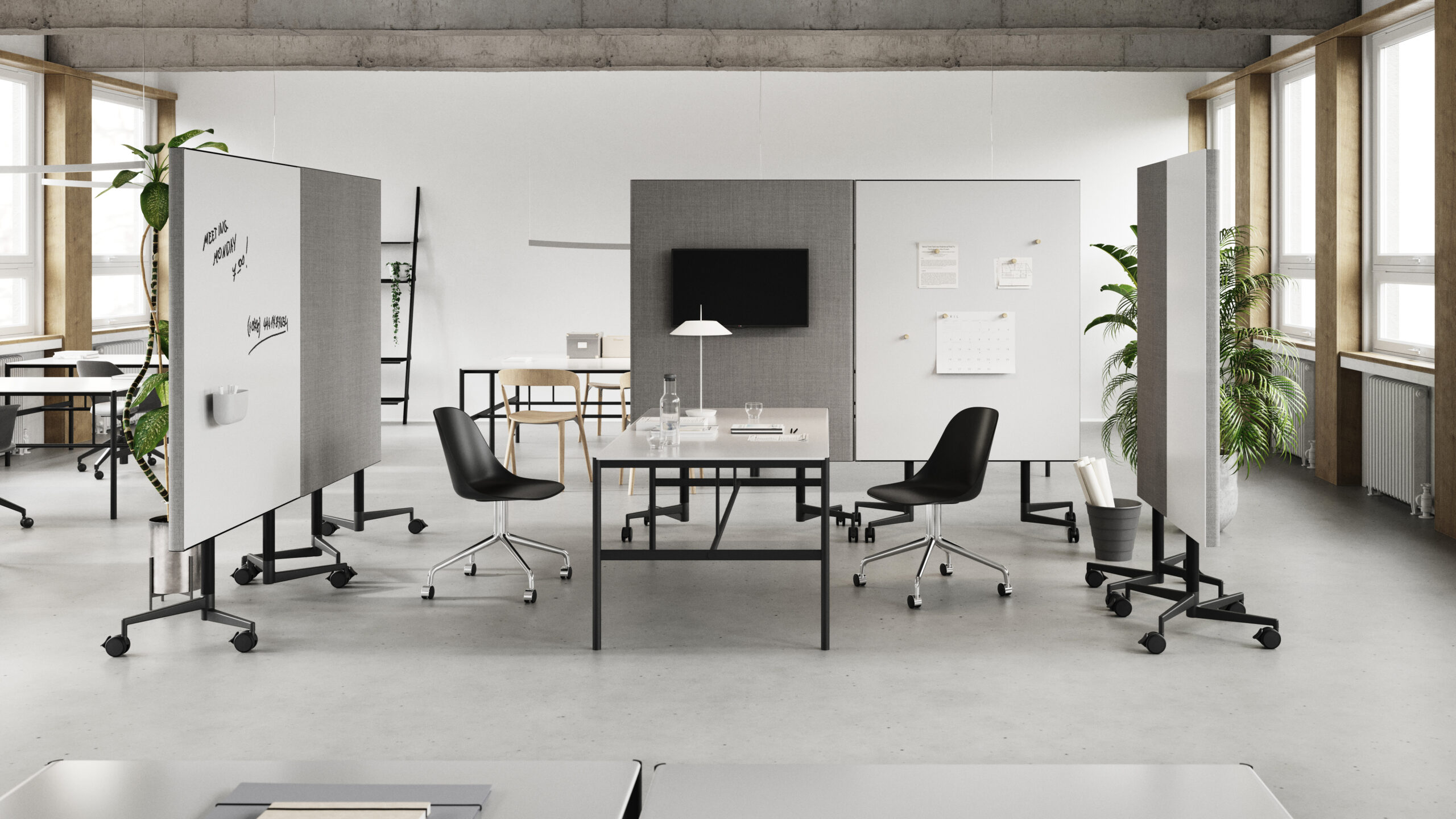
A collaborative office is not simply a space with more meeting rooms. It is an environment where people can exchange ideas, work together and move easily between individual tasks and group activities.
As workplaces become more flexible, office design plays an important role in supporting communication and creativity. From furniture placement to writing surfaces and acoustic solutions, even small design decisions can influence how a space is used.
So how can you create an office that encourages collaboration without compromising comfort or individual focus?
Create Spaces for Different Ways of Working
Not every task requires the same environment.
Some activities benefit from quiet, individual workspaces, while others require open areas where colleagues can discuss ideas and solve problems together.
Rather than designing an office around one fixed layout, consider creating different zones for different activities.
A collaborative workspace might include an open area for informal discussions, a dedicated meeting room for presentations and quieter spaces for concentrated work.
The goal is to make it easy for employees to choose an environment that suits their current task.
Make Ideas Visible and Accessible
Collaboration often begins with sharing information.
When ideas, sketches and project plans are visible, it becomes easier for teams to discuss them, develop new perspectives and follow progress over time.
Writing surfaces can therefore play an important role in collaborative office design.
A wall-mounted magnetic glass whiteboard, such as CHAT BOARD Classic, provides a dedicated space for brainstorming, planning and visual communication.
In areas where several people regularly work together, a shared writing surface can help turn conversations into something tangible.
It also allows information to remain visible after a meeting, making it easier to continue working on an idea later.
Design Flexible Spaces That Can Adapt
Modern offices often serve several purposes throughout the day.
A space used for a morning meeting might become a workshop area in the afternoon or an informal collaboration zone later in the day.
Flexible furniture and mobile writing surfaces make these transitions easier.
For example, CHAT BOARD Sprinter can be moved between different areas, allowing teams to bring their writing surface wherever it is needed.
This flexibility is particularly useful in offices where teams change, projects evolve or meeting spaces are shared.
Instead of requiring employees to adapt to a fixed environment, the workspace can adapt to their activities.
Use Room Dividers to Define Collaborative Areas
Open-plan offices offer opportunities for communication, but they can also make it difficult to separate different activities.
Creating smaller zones within a larger space can help establish clearer boundaries between individual work and collaboration.
Movable room dividers offer a flexible alternative to permanent walls.
Solutions such as CHAT BOARD Move Acoustic combine writing functionality with acoustic materials, allowing them to support visual collaboration while helping define different areas.
This can be particularly useful when creating temporary meeting spaces or separating group activities from surrounding workstations.
Consider Acoustics Alongside Collaboration
An office designed for collaboration should also consider the people who need to concentrate.
Conversations, meetings and group discussions can generate noise that affects employees working nearby.
Acoustic materials can help manage sound within shared environments, particularly when combined with thoughtful furniture placement and designated activity zones.
For example, soft materials and acoustic partitions can contribute to a more comfortable environment without requiring permanent structural changes.
The aim is not to eliminate communication, but to create a better balance between collaborative activities and focused work.
Encourage Spontaneous Collaboration
Not every productive conversation happens in a scheduled meeting.
Some ideas develop during short discussions between colleagues, informal brainstorming sessions or unexpected exchanges throughout the day.
Providing accessible collaboration areas can make these interactions easier.
A small writing surface near a shared workspace, for example, gives employees somewhere to sketch an idea or explain a concept without booking a meeting room.
Similarly, mobile boards can support spontaneous discussions by making writing surfaces available wherever they are needed.
The most effective collaborative spaces are often those that feel natural and easy to use.
Combine Functionality with Interior Design
A collaborative office should be practical, but it should also feel like a considered part of the workplace.
Materials, colours and furniture all contribute to the atmosphere of a room.
Writing surfaces do not have to be purely functional objects. Glass whiteboards can be integrated into an interior concept through their size, colour and placement.
For architects and interior designers, this creates opportunities to combine everyday functionality with a consistent visual expression.
A carefully selected writing surface can complement surrounding materials while remaining a useful part of the office.
Create a Workspace That Supports Your Team
There is no single formula for creating a collaborative office.
The most effective environments consider how employees work, how spaces are shared and how different activities can take place alongside one another.
By combining flexible layouts, accessible writing surfaces, acoustic considerations and thoughtful interior design, offices can become more adaptable to changing needs.
At CHAT BOARD, we develop magnetic glass whiteboards and multifunctional solutions designed to support communication and collaboration in modern workplaces.
Explore our collection of glass whiteboards and discover different ways to integrate writing surfaces into your next office project.