
What Size Whiteboard Do I Need? A Complete Size Guide
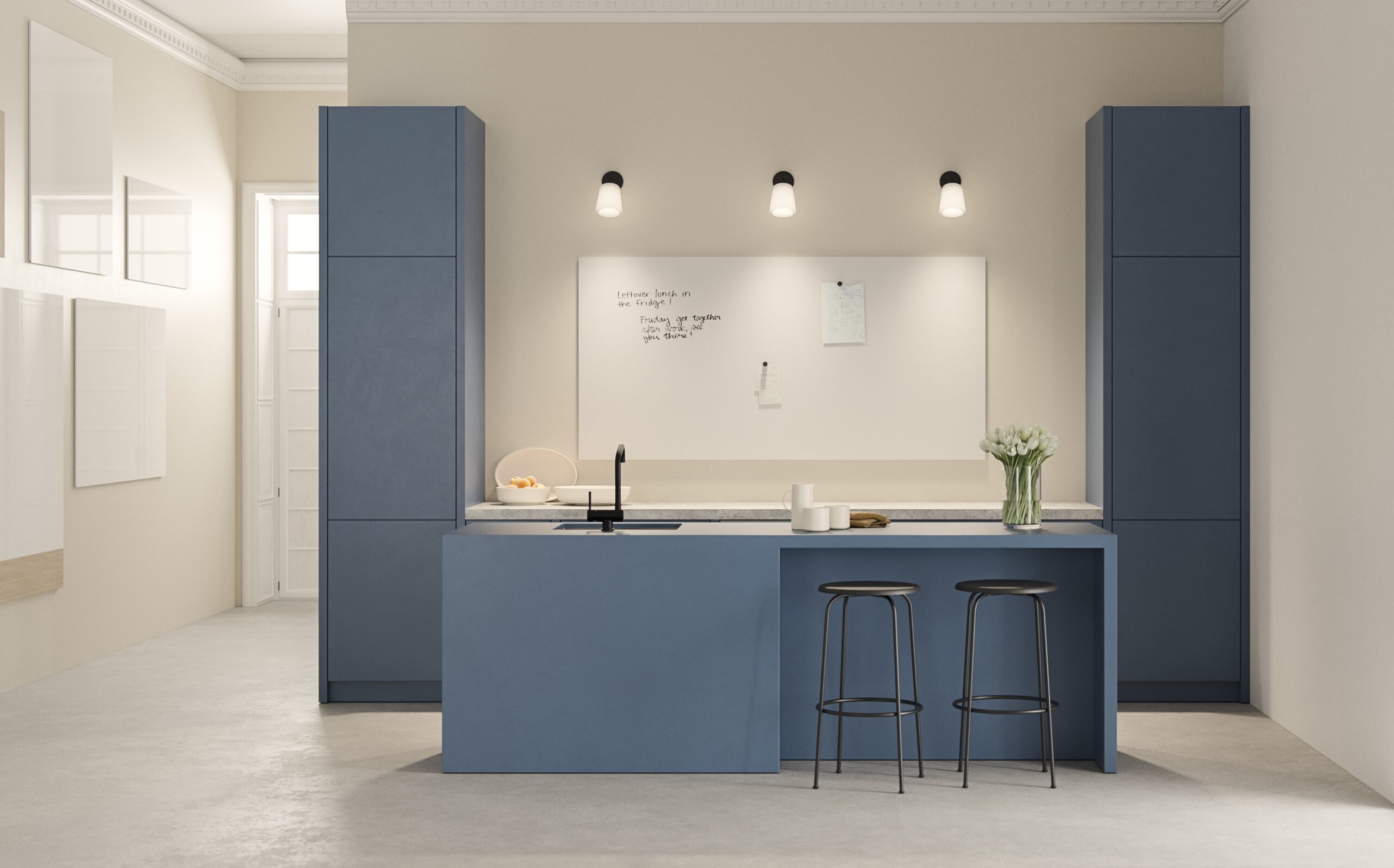
Choosing the right whiteboard size can make a significant difference to how well the board works within a space.
A board that is too small can quickly run out of writing space during meetings and workshops. A board that is too large may dominate a smaller room or simply provide more surface than you need.
So, what size whiteboard do you need?
The right choice depends on the available space, the number of people using the board and how you plan to use it. It is also worth considering whether you need a traditional wall-mounted board, a large mobile writing surface or a more flexible solution.
How do I choose the right whiteboard size?
Start with the way you plan to use the board.
If the whiteboard is mainly used for quick notes or individual work, a smaller writing surface may be sufficient. Meetings, presentations and collaborative work generally require more space.
Consider:
- How many people will typically use the board?
- How far away will people be sitting?
- How much information needs to remain visible at the same time?
- How much wall or floor space is available?
- Does the board need to stay in one place or move between spaces?
The dimensions of the room alone should therefore not determine the size of the board. How people actually work with it is just as important.
Small whiteboards
A smaller whiteboard can work well in individual offices, smaller meeting rooms and areas where the board is primarily used for notes, reminders and short discussions.
Smaller formats are also useful when wall space is limited or when several boards are used together instead of one large writing surface.
Shape can make a difference here too. A conventional rectangular board is not always necessary.
For spaces where the board should have a softer or more decorative expression, AMBIT provides an oval writing surface, while ORBIT offers a circular alternative.
These formats can be particularly useful when the writing surface needs to function as part of the interior as well as a practical tool.
Medium-sized whiteboards
For many offices and meeting rooms, a medium-sized board provides a useful balance between writing space and visual impact.
It gives teams enough room for everyday meetings, presentations and planning without taking over the entire wall.
A classic rectangular format such as CLASSIC is particularly flexible because it can work in everything from smaller meeting areas to larger collaborative spaces.
When choosing between sizes, think about how often you currently run out of writing space. If information regularly needs to be erased before a meeting or workshop is finished, moving to a larger format may be worthwhile.
Large whiteboards
A large whiteboard is particularly useful when several people need to work around the board or when a large amount of information needs to remain visible.
This is often the case in conference rooms, project spaces, workshops and collaborative environments.
More writing space makes it easier to work with diagrams, timelines, project planning and brainstorming without constantly removing earlier ideas.
A large whiteboard does not necessarily have to be fixed to the wall.
COACH is designed around a generous mobile writing surface, making it relevant when maximum writing space and mobility are both priorities.
For larger spaces, this can provide an alternative to dedicating an entire wall to a permanent board.
What size whiteboard do I need for a meeting room?
The number of people using the meeting room is a useful starting point.
A smaller meeting room used by a few people will generally require less writing space than a conference or workshop room used by larger groups.
Viewing distance matters too.
If participants are sitting several metres away, the board needs to provide enough surface for information to be written at a size that remains easy to read.
For rooms used for brainstorming and workshops, it can also be useful to choose more writing space than you think you need. Ideas tend to spread quickly across a board when several people are contributing.
If you are planning the entire room rather than only the board, see our guide to designing a modern meeting room.
Should the whiteboard be horizontal or vertical?
The right whiteboard size is not only about total surface area. Orientation matters too.
A horizontal board provides a wide writing surface and works particularly well above meeting tables, desks and other horizontal furniture.
A vertical format occupies less wall width and can be useful in narrower spaces.
Consider the proportions of the available wall as well as how people will use the writing surface before choosing the format.
Can several whiteboards work better than one large board?
Sometimes.
Using several boards can provide a more flexible writing environment than one very large surface.
Different boards can be dedicated to individual projects or teams, and multiple colours can be used to create a deliberate composition on the wall.
This can be particularly effective with glass boards because the writing surfaces become part of the interior.
Explore the CHAT BOARD® colour collection if you want to combine several boards or colours within the same space.
What size mobile whiteboard should I choose?
A mobile whiteboard changes the way you need to think about size.
Instead of focusing primarily on available wall space, consider where the board needs to move and how much floor space is available.
For larger collaborative sessions, COACH provides a generous mobile writing surface.
For spaces where a more compact footprint is important, SPRINTER ROUNDED combines a generous writing surface with a compact, stable design.
SPRINTER provides another lightweight mobile option, while MOBILE offers additional flexibility through different back panel options.
The best mobile size therefore depends not only on how much you want to write, but also on how the board needs to function within the space.
What if I need a very large writing surface?
In larger offices and collaborative environments, a conventional whiteboard may not provide enough writing space.
One option is to use several boards together. Another is to integrate the writing surface more directly into the architecture of the space.
GALLERY provides a wall-mounted frame system for glass whiteboards and can be used where the board should have a more integrated architectural expression.
For larger installations, DYNAMIC FLEX WALL and DYNAMIC FLEX FLOOR provide alternative ways to incorporate substantial writing surfaces into the interior.
This can be particularly relevant in project rooms, larger meeting areas and collaborative spaces where the writing surface is used as a permanent part of the environment.
What if a standard whiteboard size does not fit?
Sometimes the room determines the dimensions.
Architectural details, furniture, screens, doors and existing wall elements can make a standard board size difficult to integrate.
In these situations, a customised solution may make more sense than compromising with a board that is either too small or too large.
CHAT BOARD MADE-TO-MEASURE makes it possible to adapt a solution to the dimensions and requirements of a specific space.
This can be particularly relevant for larger projects and interiors where the writing surface needs to align precisely with the surrounding architecture.
How much space should I leave around a whiteboard?
Do not choose a whiteboard simply because its dimensions technically fit on the wall.
Some visual space around the board helps prevent the installation from feeling cramped.
Consider nearby doors, switches, screens, shelves and furniture. Users should also be able to reach the writing surface comfortably without furniture getting in the way.
Before choosing a size, measure the available area carefully.
A simple way to understand the scale is to mark the proposed dimensions directly on the wall with removable tape. This gives you a much clearer impression of how large the board will actually appear in the room.
Does colour affect how large a whiteboard looks?
The physical dimensions remain the same, but the visual impression can change considerably.
A large white surface may stand out strongly against a darker wall, while a coloured glass board can either blend into the surrounding palette or become a deliberate focal point.
This becomes increasingly important as the board gets larger because it occupies more of the visual space within the room.
When choosing a large glass board, consider size and colour together rather than treating them as separate decisions.
Wall-mounted or freestanding?
If you have enough wall space and the board will always be used in the same location, a wall-mounted solution is often the simplest choice.
It keeps the floor clear and allows the writing surface to become a permanent part of the room.
Freestanding and mobile boards are useful when spaces have several functions or when teams need to move their writing surface between different areas.
Products such as MOVE ACOUSTIC can add another function entirely by combining a writable magnetic glass surface with an acoustic panel, making the board useful as both a writing surface and a flexible room divider.
The right choice therefore depends on more than whiteboard size alone. Consider what you need the board to do within the room.
Find the right whiteboard size for your space
There is no single ideal whiteboard size.
For smaller spaces, a compact wall-mounted board may provide everything you need. Everyday meeting rooms often benefit from a medium-sized writing surface, while workshops and collaborative environments may require a large board or several surfaces working together.
For flexible spaces, a mobile solution can provide writing space where it is needed. And when standard dimensions do not suit the architecture, a customised solution may be the better choice.
Start with the people using the board, the way they work and the space around them. The right size should support the activity without overwhelming the room.
Explore the full CHAT BOARD product collection to compare wall-mounted, mobile and customised writing solutions.